








Introduction
For many hospitality businesses, creating a welcoming atmosphere is just as important as providing excellent food and customer service. Restaurants, cafés, accommodation providers and outdoor entertainment venues all look for ways to make their spaces comfortable and memorable.
Wood-fired cooking equipment, outdoor fireplaces and decorative fire pits can contribute to that experience. However, these features also introduce an operational requirement that businesses should not overlook: maintaining a dependable supply of suitable firewood.
Running out of fuel during a busy service or discovering that stored timber is unsuitable for an appliance can create unnecessary disruption. With sensible purchasing arrangements, appropriate storage and a clear understanding of different hardwood products, businesses can manage their supplies more effectively.
Why Firewood Planning Matters for Hospitality Businesses
Commercial venues often operate according to schedules that leave little room for unexpected interruptions. A restaurant may have customers waiting for wood-fired pizzas, while an accommodation provider might offer outdoor fire facilities as part of the guest experience.
In both situations, having the correct fuel available is essential.
Unlike occasional household use, commercial consumption can be more predictable and sometimes considerably higher. Businesses may need to replenish their supplies regularly, particularly during busy periods or colder weather.
Planning ahead helps managers avoid last-minute purchases, maintain consistent operations and allocate storage space appropriately.
A reliable supply arrangement should account for:


- The type of wood-burning equipment being used.
- Average daily or weekly fuel consumption.
- Expected seasonal demand.
- Available storage capacity.
- Delivery schedules and access requirements.
- The characteristics of the selected hardwood.
These considerations help businesses create a purchasing routine that fits their operating needs.
Different Commercial Applications Require Different Firewood
Not every hospitality venue uses firewood in the same way. The right product depends on whether the timber is intended for cooking, heating or outdoor entertainment.
Restaurants With Wood-Fired Pizza Ovens
Wood-fired pizza ovens are popular in restaurants that want to offer traditional cooking methods and distinctive menu experiences.
These appliances require suitable fuel and careful temperature management. The type of timber, oven construction, airflow and cooking technique all influence performance.
Jarrah is a dense Western Australian hardwood valued for its sustained heat and long-burning coals. JJ’s Firewood lists Jarrah Only as suitable for pizza ovens, alongside indoor fireplaces and wood heaters.
Businesses should always follow their oven manufacturer’s fuel recommendations and operating instructions. Only clean, untreated timber approved for the appliance should be used.
Cafés and Outdoor Dining Areas
Cafés with outdoor seating may use approved fireplaces or fire pits to make dining areas more comfortable during cooler weather.
A properly maintained outdoor fire can create a welcoming focal point for customers. However, the venue needs to consider more than appearance.
Staff should know how to operate the equipment safely, maintain suitable clearance from furniture and combustible materials, and manage the disposal of ash.
The business should also check local regulations and ensure that outdoor fires are permitted at the premises.
Accommodation Providers
Hotels, holiday rentals and rural accommodation businesses sometimes provide outdoor fire facilities as an additional guest amenity.
For these operators, firewood availability can become part of the guest preparation process.
A supply of appropriately sized, dry timber can make it easier to prepare designated fire areas before guest arrivals.
Accommodation managers should also provide clear instructions about permitted fire locations, safe operation and extinguishing procedures.
Retailers Selling Bagged Firewood
Some retailers offer packaged firewood as a product for customers who need smaller quantities.
Bagged supplies can be useful where shoppers want a manageable purchase rather than a bulk delivery.
Retail businesses should consider the space required for stock, product handling, packaging condition and the rate at which different quantities sell.
Selecting the Right Hardwood for Commercial Use
Commercial buyers should compare products according to performance requirements rather than choosing solely on price.
JJ’s Firewood provides several hardwood options for residential and business customers.
Jarrah Only Made from 100% Jarrah, this premium option is valued for its dense timber, lasting heat and long-burning coals. It may suit commercial venues with appropriate wood-fired ovens, fireplaces and heating equipment.
Jarrah Bush Mix This product combines Jarrah with selected Western Australian hardwoods. Depending on seasonal availability, the blend may contain Sheoak, Karri, Marri, Blackbutt and Banksia. It is positioned as an everyday option offering a balance of heat, performance and value.
Jarrah Mill Ends These are Jarrah offcuts offered at a lower price. Piece dimensions can vary, so businesses should consider whether the sizes are appropriate for their equipment and handling arrangements.
Budget Burner Primarily made from Stringybark, this product may include other seasoned hardwoods depending on availability. It is an economical option for general fires, outdoor heating and other suitable applications.
Before placing a commercial order, managers should confirm that the chosen product is appropriate for the intended appliance.
Businesses looking for a supplier of firewood perth can compare the available products and delivery arrangements through JJ’s Firewood.
Why Jarrah Can Be Valuable for Suitable Commercial Appliances
Timber density is an important consideration when selecting fuel for wood-burning equipment.
Dense hardwoods can provide sustained burning characteristics when properly seasoned and used in suitable appliances. This can be helpful for businesses that need to manage fuel consumption during longer operating periods.
Jarrah is particularly recognised in Western Australia for its density and durability.
Its long-burning coals make it an option worth considering for appropriate wood heaters, fireplaces and pizza ovens.
However, businesses should remember that fuel performance is influenced by several factors. Moisture content, log dimensions, airflow and equipment design all matter.
Managers interested in jarrah firewood can review the available product information before deciding whether it meets their commercial requirements.
Calculating Commercial Firewood Requirements
Estimating consumption is one of the most useful steps in managing a business supply.
Rather than ordering an arbitrary quantity, managers should review how much timber the venue uses during a normal operating period.
A restaurant could record its average consumption per service. An accommodation provider might calculate the amount used per guest booking, while a retailer could track weekly sales.
Once a reasonable average has been established, it becomes easier to estimate future requirements.
For example, a business can use the following approach:
- Record the quantity of firewood used during a typical week.
- Identify periods when consumption increases.
- Calculate the amount needed for the next ordering cycle.
- Consider additional stock for unexpected demand.
- Compare the required quantity with available storage space.
- Arrange delivery before existing stock becomes insufficient.
These records can also help identify seasonal patterns and improve purchasing decisions over time.
Choosing Between Bagged Firewood and Bulk Deliveries
Commercial buyers have different storage facilities and handling requirements.
Some businesses may prefer bagged products because individual packages are easier to move and distribute. This arrangement can suit smaller venues, retailers and accommodation providers with limited storage.
Larger businesses may find bulk deliveries more practical.
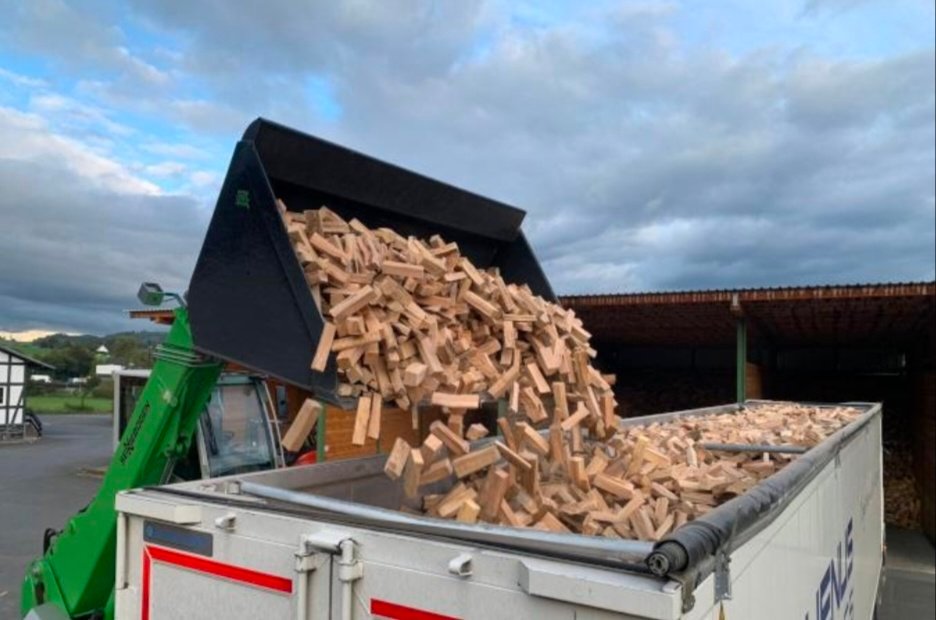
JJ’s Firewood measures loose loads using front-end loader scoops. Its listed options range from a 6×4 trailer load with two scoops to a full truck load with sixteen scoops.
Approximate quantities include:
- Two scoops: approximately half a tonne.
- Four scoops: approximately one tonne.
- Eight scoops: approximately two tonnes.
- Ten scoops: approximately two and a half tonnes.
- Twelve scoops: approximately three tonnes.
- Sixteen scoops: approximately four tonnes.
Actual weights are approximate and can vary according to moisture content.
For businesses that need smaller packaged quantities, 15–20 kg firewood bags are also available in different order quantities.
The best arrangement depends on consumption, available unloading space, staff capacity and stockroom layout.
Creating a Practical Firewood Storage System
Commercial storage requires more attention than simply placing timber in an unused corner.
Firewood should be kept in a location that protects it from rain while allowing air to circulate.
A suitable storage system should include:
- Raised storage: Keep timber off the ground using suitable pallets or racks. This helps reduce exposure to damp surfaces.
- Weather protection: Use a roof or appropriate cover to protect the top of the stack from rainfall.
- Ventilation: Allow airflow around the timber rather than sealing the entire supply in an airtight covering.
- Organised stacking: Separate different products and arrange the stock so older supplies can be used first.
- Safe access: Keep storage areas clear of customer walkways, emergency exits and operational equipment.
Businesses should also consider workplace safety when moving large quantities. Staff need appropriate handling procedures and suitable equipment for lifting and transporting logs.
Maintaining Consistent Quality Across Deliveries
A commercial purchasing arrangement should focus on consistency as well as availability.
Managers should keep records of the products ordered, delivery quantities and any issues identified after arrival.
It is useful to confirm that the timber is seasoned, dry and untreated. Suppliers should also be able to explain the differences between their available hardwood products.
For businesses using specialised equipment, checking log dimensions before ordering can help avoid unnecessary handling or preparation.
Storage inspections should take place regularly, especially after heavy rainfall or changes in weather.
These simple procedures can help prevent stock deterioration and make it easier to maintain suitable fuel supplies.
Working With a Supplier That Understands Commercial Needs
Hospitality operators benefit from suppliers that can accommodate different order sizes and recurring requirements.
JJ’s Firewood supplies both residential and commercial customers throughout Perth. Its commercial offering includes regular deliveries, bulk orders and bagged supply for restaurants, accommodation providers and retailers.
The company also invites businesses to enquire about custom pricing and urgent delivery requests.
Orders are processed on the day they are received, while delivery is available seven days a week. Most orders are fulfilled within seven days, depending on the suburb and current demand.
Businesses can review delivery availability by entering their address during checkout or contact the supplier to discuss a tailored arrangement.
For a venue with regular fuel requirements, discussing expected consumption and delivery frequency in advance can help establish a more convenient supply routine.
Safety Responsibilities for Commercial Venues
Businesses that operate wood-burning equipment have a responsibility to protect customers, employees and property.
Indoor fireplaces, stoves and ovens should be inspected and maintained according to the manufacturer’s recommendations.
Chimneys and flues require appropriate cleaning to reduce the risk of dangerous deposits accumulating.
Outdoor fire facilities should be positioned and operated in accordance with applicable regulations. Staff should understand how to supervise fires, manage hot surfaces and extinguish embers safely.
Only suitable untreated fuel should be used. Painted timber, treated wood, rubbish and construction offcuts should never be substituted for approved firewood.
Venues should also maintain appropriate fire safety equipment and ensure that employees understand emergency procedures.
Conclusion
A dependable firewood supply can support the daily operations of restaurants, cafés, accommodation providers and other commercial venues that use wood-burning equipment.
Selecting suitable hardwood, calculating realistic consumption and arranging appropriate delivery quantities can make fuel management considerably easier.
Jarrah, mixed hardwoods, mill ends and budget products offer different options for businesses with varying requirements. The important step is matching the product to the appliance, operating schedule and budget.
With organised storage, sensible purchasing arrangements and proper safety procedures, hospitality businesses can maintain their wood-fired facilities while providing a comfortable and memorable experience for customers.