







Introduction
Indoor playgrounds offer children an opportunity to explore, move, socialize, and develop important physical and cognitive skills. However, a successful play environment should do more than provide exciting attractions. It should also welcome children with different abilities, developmental stages, and sensory preferences. Inclusive playground design makes entertainment more accessible while creating a positive experience for families.
For commercial entertainment centers, inclusivity is not simply an additional feature. It can influence customer satisfaction, strengthen a venue’s reputation, and help businesses serve a wider audience. By considering accessibility from the beginning, operators can create an indoor play environment where more children feel comfortable participating.
Understanding What Makes an Indoor Playground Inclusive
An inclusive playground is designed to accommodate a broad range of physical, sensory, and developmental needs. This does not mean every child must use every attraction in exactly the same way. Instead, the environment should provide different opportunities for participation.
Some children may enjoy climbing structures and slides, while others may prefer quieter activities, interactive panels, or imaginative play areas. Children with limited mobility may need accessible routes and equipment that can be approached without navigating difficult obstacles.
The first step is understanding the different ways children interact with their surroundings. Business owners should consider movement, balance, communication, sensory experiences, and social interaction when developing their concepts.
An inclusive environment also benefits parents and caregivers. Clear pathways, comfortable seating, visible activity zones, and convenient facilities can make family visits easier and more enjoyable.
Planning an Accessible Layout
The physical arrangement of an indoor playground has a significant influence on accessibility. Even well-selected equipment can become difficult to use if the surrounding space is poorly organized.
Start by creating clear circulation routes between the entrance, reception, activity areas, seating, and essential facilities. Pathways should allow visitors to move around without unnecessary obstacles. Avoid placing decorative elements, loose furniture, or storage items where they could restrict movement.



Different activity zones should be easy to identify. For example, active play equipment can occupy one section, while quieter activities can be positioned in a separate area. This arrangement helps families choose experiences that match their children’s preferences.
Visibility is another important consideration. Parents should be able to observe children from appropriate seating areas without constantly moving around the facility. Open sightlines can also help staff supervise activities more effectively.
Before finalizing a floor plan, consider how children and adults will move through the space during busy periods. A layout that works for a small group may become difficult to navigate when the facility is full.
Providing Different Types of Play Experiences
A playground becomes more inclusive when it offers several ways to participate rather than relying on one type of physical challenge.
Physical and Movement-Based Activities
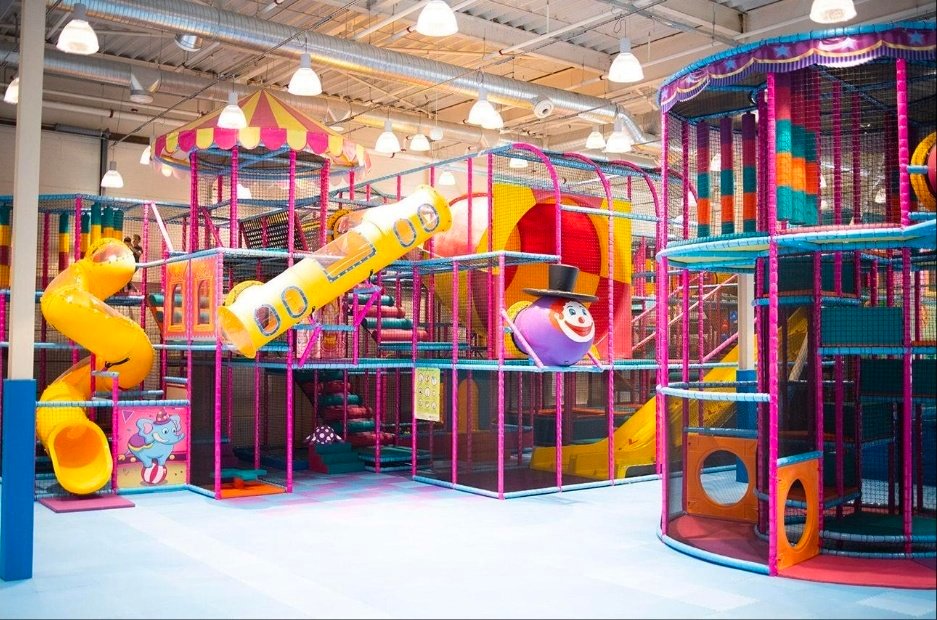
Climbing, sliding, balancing, and jumping activities encourage movement and coordination. These attractions can form an exciting part of the facility, but businesses should consider different ability levels when planning their placement and accessibility.
Where practical, provide alternative routes, lower-level activities, and opportunities for children who may not be comfortable with challenging structures. The goal is to offer meaningful participation without making every attraction dependent on advanced physical skills.
Interactive and Imaginative Play
Interactive walls, sensory panels, pretend-play settings, and creative activity stations can offer engaging alternatives to physically demanding equipment.
These experiences encourage curiosity, problem-solving, communication, and creativity. They can also appeal to children who prefer individual activities or need time to become comfortable in a new environment.
Social Play Opportunities
Some attractions naturally encourage cooperation and communication. Group games, role-play areas, and shared creative activities can help children interact at their own pace.
Designers should avoid making every experience competitive. Activities that allow children to participate together without focusing entirely on speed or physical performance can create a more welcoming atmosphere.
Considering Sensory Needs
Indoor playgrounds often contain bright colors, music, movement, and multiple simultaneous activities. While these elements can create an exciting atmosphere, they may feel overwhelming for some visitors.
A thoughtful design can balance stimulation with opportunities for relaxation.
Consider establishing a quieter zone away from the loudest attractions. This area could include comfortable seating, simple activities, and a calmer visual environment. Families may use it when children need a break from busy play areas.
Lighting should also be considered carefully. Consistent illumination and reduced visual clutter can make the environment more comfortable. Where possible, avoid unnecessary flashing effects or excessive sound from attractions.
Clear signs and visual instructions can help children understand where activities are located and what they involve. Simple symbols, recognizable colors, and easy-to-follow directions can improve navigation for families.
These details may appear small, but together they can make the facility easier to understand and enjoy.
Choosing Equipment with Accessibility in Mind
Equipment selection should reflect the needs of the intended audience. Commercial playground operators should evaluate more than appearance, entertainment value, and the number of attractions included in a package.
Consider the following factors:
- Ease of access: Can children approach and enter the activity area comfortably?
- Different ability levels: Are there options for children with varying physical capabilities?
- Comfort: Are surfaces, seating areas, and activity spaces suitable for their intended use?
- Visibility: Can caregivers and staff observe important areas?
- Clear instructions: Are operating rules and activity guidance easy to understand?
- Maintenance: Can the equipment be inspected, cleaned, and maintained consistently?
Working with an experienced Indoor Playground Manufacturer can help business owners explore equipment arrangements that reflect their facility’s available space and design priorities. Sharing the intended age range, visitor expectations, accessibility goals, and site dimensions early in the planning process can make discussions more productive.
The objective is not to add accessibility features at the last moment. It is to consider different users while developing the overall playground concept.
Making Trampoline Areas More Considerate of Different Users
Trampoline attractions can add excitement and physical activity to an indoor entertainment facility. However, they require particularly careful planning because jumping activities involve balance, coordination, movement, and supervision.
Not every child will be ready or comfortable to use a trampoline. A well-designed venue should provide other attractions so that children who do not participate in jumping activities can still enjoy their visit.
For facilities considering a dedicated trampoline zone, important planning areas include suitable access, clearly defined activity boundaries, appropriate supervision, and understandable operating instructions. The number of users and the arrangement of individual activity areas should also be considered.
A business exploring this attraction category can consult a Trampoline Park Equipment Manufacturer when evaluating possible layouts and equipment options. The final design should reflect the venue’s intended audience, available floor space, operational procedures, and safety planning.
Providing alternative activities nearby can also help families enjoy the facility together without requiring every visitor to participate in the same experience.
Training Staff to Support Inclusive Play
Equipment and layout are only part of an inclusive playground. Staff members have an equally important role in creating a welcoming atmosphere.
Employees should understand the basic purpose of the different activity zones and know how to communicate clearly with children and caregivers. They should be prepared to explain available activities, identify quieter spaces, and assist visitors who have questions about access.
Training should also cover respectful communication. Staff should avoid making assumptions about what a child can or cannot do. When assistance is needed, asking the child or caregiver how to help is often a better starting point than immediately intervening.
Consistent supervision remains essential. Employees should understand the operating rules for each attraction and know how to respond to situations that require assistance.
A welcoming team can make families feel more comfortable and encourage positive relationships with the business.
Involving Families in the Design Process
One of the most useful ways to improve inclusivity is to gather feedback from the people who will use the facility.
Before opening, operators can consult parents, caregivers, educators, and accessibility professionals. Their perspectives may highlight practical issues that are easy to overlook during the design stage.
For an existing playground, feedback can reveal which areas are difficult to navigate, which attractions are most popular, and where additional seating or clearer signage might help.
After opening, businesses should continue collecting comments. Visitor feedback, staff observations, and routine facility assessments can help identify opportunities for improvement.
It is also important to avoid treating inclusivity as a finished project. Children’s needs, customer expectations, and equipment options can change over time. Regular evaluation helps businesses maintain a welcoming environment as the facility develops.
Balancing Inclusive Design with Business Goals
An inclusive playground can support commercial objectives by making the venue relevant to a broader range of families. When visitors find an environment comfortable and enjoyable, they may be more likely to recommend it, return for another visit, or consider it for a birthday celebration.
Businesses should approach these benefits through realistic planning rather than assuming that every additional feature will automatically generate revenue.
Start with a clear budget and prioritize improvements that have a meaningful effect on visitor access and experience. Some changes, such as improving signs, rearranging furniture, or creating a quieter seating area, may be relatively straightforward. Other changes may require specialist advice, construction work, or new equipment.
Operators should also consider ongoing costs, including cleaning, maintenance, staff training, and equipment inspections. An accessible feature only remains useful when it is properly maintained and integrated into daily operations.
Conclusion
Inclusive indoor playground design creates opportunities for more children to participate in recreation, exploration, and social interaction. It requires careful attention to layout, equipment selection, sensory experiences, staff training, and the needs of families.
For commercial operators, the most effective approach is to consider accessibility from the earliest planning stages instead of treating it as a separate addition. By offering different types of activities, providing clear routes, maintaining comfortable spaces, and listening to visitors, businesses can build entertainment environments that welcome a wider audience.
A playground should be more than a collection of attractions. It should be a place where families feel comfortable, children can discover activities that suit them, and everyone has an opportunity to enjoy the experience.