








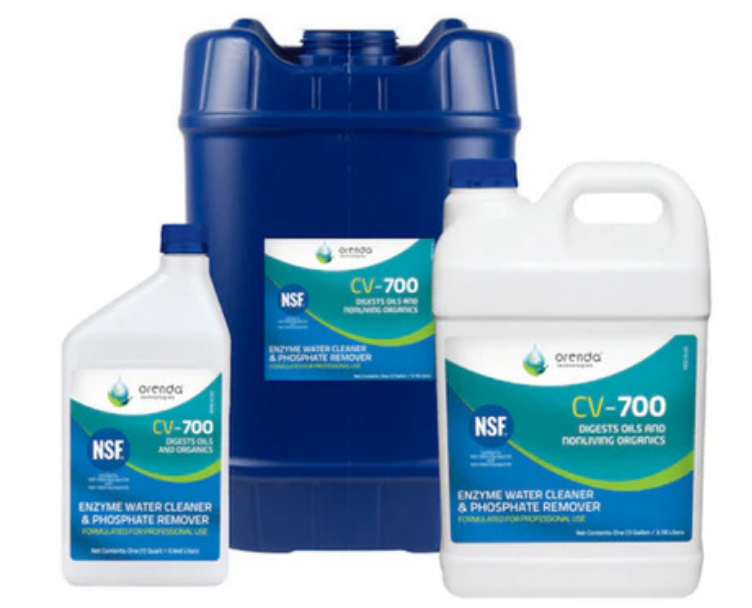
Maintaining chlorine levels is not enough to keep pool water clean and balanced. The hidden factor that can impact water quality is the amount of phosphate present. Phosphates are chemicals that promote algae growth, and elevated levels of phosphates may make it difficult to keep your pool water clear even if the chemical readings seem to be within the proper range.
A phosphate remover can remove excess nutrients from a pool to improve water clarity and reduce the amount of phosphate in the water. But it is important to use the correct dosage. Adding too much or too little product can fail to give the desired effect. Knowing what phosphate removers do and how much you require can help you keep your pool water cleaner.
Why Phosphates Matter in Pool Water
Phosphates can enter a pool from a number of sources, such as
- Leaf litter and other organic material
- Rainwater runoff
- Fertilizers
- Cleaning products
- Swimmer contaminants
- Environmental materials
Phosphates do not cause water clarity issues directly but can promote algae growth. If there is excessive phosphate, the algae can grow more readily and cause issues like the following:
- Green water
- Cloudy appearance
- Increased chemical use
- Frequent algae treatments
Pools with lower phosphate concentrations will work and maintain more effectively with lower concentrations of chemicals.
How Much Pool Phosphate Remover Should You Use?
The quantity of pool phosphate remover needed will depend on a variety of factors, such as:
- Current phosphate level
- Pool size
- Product concentration
- Severity of the issue
The majority of phosphate removers come with instructions on the amount to add, depending on the number of gallons or litres in your pool and also the phosphate level obtained from your water test.
For instance, the phosphate level in a pool might be slightly higher, and a smaller treatment dose may be sufficient, or a pool with high phosphates may need to be treated more heavily or even more if multiple treatments are necessary.



Never estimate the amount; always follow the manufacturer’s instructions.
Test Phosphate Levels before Adding Remover
Before using a pool phosphate remover, it is important to test your water. If you know your current phosphate reading, you can then calculate how much product is required.
Testing helps you to learn:
- Actual levels of phosphate may not be high
- What is the amount of treatment needed
- If the treatment was successful or not
Many a pool owner makes the mistake of putting pool phosphate remover into their pool without testing the phosphate levels to begin with. This can result in surplus use of chemicals and additional maintenance.
How Pool Phosphate Remover Works
The pool phosphate remover functions on the principle that it will combine with the phosphates in the water, and then they can be filtered out. The filter system will remove the particles formed after the product reacts with the phosphates.
Once the phosphate remover has been added, you may see
- Temporary cloudiness
- Increased filter activity
- Watercolor variations with time
This is usually a part of the removal process, when the filtration system grabs the particles.
The product will work better if it has sufficient circulation time.
Steps for Using Pool Phosphate Remover Correctly
These are general guidelines to follow for better results:
Test Your Water
Test water phosphate levels and water balance prior to treatment.
Determine the Proper Dose
Calculate the quantity needed based on the size of the pool and the directions on the products.
Add the Product Properly
Apply remover by following the manufacturer’s recommendations.
Run the Filtration System
Use a pump to assist removal of the particles from water.
Clean or Backwash the Filter
During the process the filter might retain some other material, which may require maintenance.
This method will increase water clarity and avoid unnecessary chemical adjustments.
Can Too Much Phosphate Remover Cause Problems?
Excessive use of the pool phosphate remover can cause problems. Overuse can result in:
- Temporary cloudy water
- Increased filter workload
- Higher maintenance requirements
The more, the more doesn’t always apply to the results. A proper dosage in your water is the best option.
How Often Should You Use Phosphate Remover?
How frequently you change the phosphate in your pool will depend on your pool environment and maintenance schedule. Some pools might require occasional treatment, and others may require more frequent monitoring.
Phosphates can build up when:
- The pool area is overgrown and cluttered.
- Frequent debris exposure
- High swimmer activity
- Inadequate water maintenance practices
Testing can be helpful to identify when treatment is needed.
Pool Phosphate Remover vs Pool Stain Remover
It is important to realize that various pool issues have various solutions. Algae-busting pool phosphate remover targets excess phosphates and help to lower algae-supporting nutrients.
A pool stain remover, however, is intended to get rid of stains resulting from the following:
- Metals
- Mineral deposits
- Organic discoloration
When your pool has brown, yellow, or rust-colored marks, the phosphate treatment could be ineffective. If you know the cause of the problem, you can select the appropriate product.
Final thoughts
The quantity of pool phosphate remover needed will depend on your pool size, the phosphate level, and the product used. Water testing prior to treatment is most effective in determining the correct dosage and eliminating unnecessary chemical usage.
Phosphate control is a component of the process of keeping water clear in a pool. With proper chemical balance, regular cleaning, and appropriate products, including use of a pool stain remover when necessary, it is possible to maintain a healthy, clean, and easier pool throughout the season.